You’re having a baby!
Today Kazakhstan celebrates Gratitude Day. There is no doubt that on this day, the pioneers of in vitro fertilization in our country could hear words of gratitude at least 12,000 times — that is how many IVF babies have been born over the 25 years of their work.
Worldwide, around 8 million people have been born with the help of IVF, and this number continues to grow every day.
The subject of our conversation is deeply personal and, at the same time, socially significant; delicate, yet fundamentally timeless…
“There was a great deal of misunderstanding, mistrust, and underestimation surrounding IVF back then — and some of it still exists today. Many people took the term ‘test-tube babies’ literally. There was even an amusing incident in the early days of the project when journalists asked us to show them the jar in which the baby was growing,” our editorial guests recall.
Welcome to the discussion with Mirgul Dzhilkishinova!
Editorial Guests: Batyr Karatayevich Bekmussayev, CEO of the Ecomed Group of Clinics; Saltanat Berdenovna Baikoshkarova, Scientific Director and Reproductive Medicine Specialist; Almaz Kurmanaliyevich Ibragimov, Medical Director of the Ecomed-Astana Clinic.
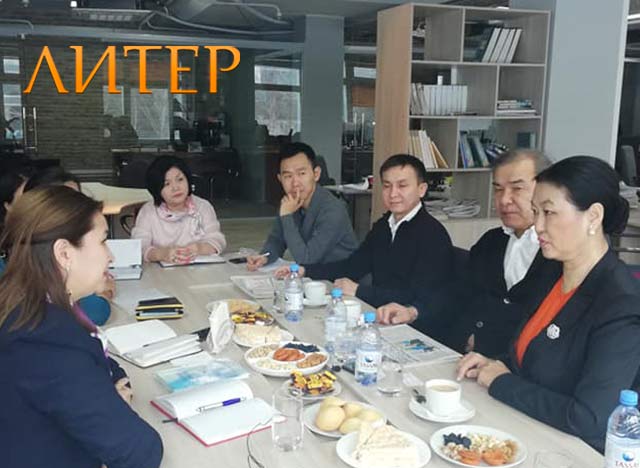
Topic: In Vitro Fertilization (IVF) in Kazakhstan: The Journey So Far and Future Prospects.
THROUGH HARDSHIP TO THE BIRTH OF CHILDREN
Batyr and Saltanat are a remarkable married couple with extraordinary energy. They complement each other so naturally that it helps explain the success of their creation — the Ecomed clinic, which helps patients overcome infertility.
Batyr, a businessman who speaks firmly, clearly, and to the point, initially observed his wife’s initiative to establish an IVF project in Kazakhstan with some caution. Only four years later, after realizing that this was not a passing idea but meaningful, valuable, albeit difficult work, did he stand shoulder to shoulder with Saltanat, providing both moral and financial support.
Today, they look back on that journey with a smile. The events of 25 years ago have become part of history. Yet those challenges strengthened their marriage and reinforced their belief in their shared mission.
And the 12,000 children born over those years have proved that everything they went through was worthwhile.
Saltanat: — I personally faced infertility, and that is what sparked my interest in this problem. When I began working at the Marriage and Family Consultation Center in 1988, I became deeply involved in infertility treatment. But the technologies available at the time were still in their infancy. You could almost say they did not exist, while IVF itself was only beginning to emerge in global medical practice.
IVF teams were already working in Russia, Ukraine, and other countries. And I asked myself: why can’t we perform in vitro fertilization in Kazakhstan?
We diagnosed and treated infertility using the methods available at the time. I introduced artificial insemination, but very quickly realized that it could only take us so far. It did not solve the broader problem of infertility.
For most specialists, IVF seemed like something out of science fiction. Many were shocked by the idea. People told me directly: “You will never succeed with the resources we have.”
And it truly was a turning point in history, a period of widespread shortages. The entire clinic had only one ultrasound machine.
There is no point pretending otherwise — advanced technologies were hardly a priority at the time. But I was convinced that I would achieve my goal.
Fortunately, my husband supported me. I traveled to different countries for training. My husband financed those trips because he had a successful business, although he asked me not to involve him beyond providing financial support.
But there was no stopping me by then. Moreover, I specifically wanted to establish the IVF unit within a public medical institution.
These were the 1990s, and public clinics simply could not afford such technologies for many reasons. There were power outages and shortages of virtually everything.
But when I invited Professor Zdanovsky, my teacher, from Moscow and introduced him to my husband, things finally began moving forward with the support of these two men.
At the time, even healthcare administrators did not fully understand what we were talking about. They could not distinguish artificial insemination from IVF.
Some even joked: “Find donors like us — handsome, intelligent, successful — and take our genetic material.”
I had to explain that the problem was not limited to sperm. If a woman had problems with her fallopian tubes, an entirely different and more advanced method was required.
The following years only strengthened my conviction.
At that time, infertility treatment was generally offered only to women under 32, while older women were considered to have little or no chance. Today, that age threshold has increased considerably.
Back then, perhaps only 20 out of 100 women had a chance of becoming mothers. Today, IVF can address the problem of infertility in the vast majority of cases.
THE BIOLOGICAL CLOCK CANNOT BE STOPPED
Contrary to the widespread belief that IVF makes it possible to have a child at any age, specialists emphasize that the biological clock continues to tick for everyone. No technology can stop it completely.
That is why planning for children should ideally begin at a younger age.
Saltanat: — Human biology is such that female reproductive capacity is naturally quite limited.
It may seem simple — that any woman can become pregnant as a result of sexual intercourse. But that is far from the reality.
Scientific statistics show that, at best, one child is born for approximately every 104 acts of intercourse.
Under normal circumstances, a 20-year-old woman has only about a 15–20% chance of becoming pregnant within a single month. At age 30, the probability is around 10%, and at 40, approximately 5%.
That is why infertility treatment is such a complex process.
We must also remember that the biological clock cannot be stopped. We have to work with nature.
Yes, today it is technically possible for a woman to give birth even at the age of 60. But donor eggs would be required.
The ovaries are among the first parts of a woman’s reproductive system to undergo age-related decline, and the number and quality of oocytes decrease substantially with age.
Accordingly, the chances of becoming pregnant at 40 are lower — even with IVF.
We cannot rely on medicine alone. The earlier you consult a doctor, the greater your chances.
A SKILLED SPECIALIST IS WORTH THEIR WEIGHT IN GOLD
Saltanat: — One of the major challenges in our country is the shortage of infertility specialists. They are not available in every regional center. Most are concentrated in Almaty and Astana.
It is important to understand that infertility specialists are not simply general gynecologists.
Yes, their basic medical training is in gynecology. But afterward, specialists follow different professional paths.
The first group consists of obstetrician-gynecologists specializing in childbirth. The second consists of outpatient gynecologists who treat general gynecological conditions and manage pregnancies. The third group consists of gynecological surgeons who perform operations.
And the fourth group consists of reproductive medicine specialists.
There are very few of them in Kazakhstan.
I travel extensively throughout the regions, and I know that they are simply unavailable in some areas.
A couple of years ago, the chief obstetrician-gynecologist of the South Kazakhstan region asked me to open an Ecomed branch there. The population density is high, yet there are not enough specialists.
Many women could be helped before IVF becomes necessary. But most gynecologists are occupied with obstetric care.
Patients need reproductive medicine specialists — modern physicians who can address infertility promptly and effectively.
When we open branches in the regions, one of the first difficulties we encounter is finding suitable specialists among the available doctors.
Another challenge is that not every gynecologist wants to work in this field. Reproductive medicine requires extensive analytical thinking. Infertility is essentially an equation with many unknown variables.
Sometimes a patient needs treatment for a month; sometimes for a year. And the outcome is never completely predictable.
HAVING A CHILD — IS IT EXPENSIVE?
In addition to the fact that IVF cannot guarantee a 100% successful outcome, the procedure is also expensive. It is far from affordable for everyone, which naturally generates considerable discussion.
Batyr: — Our doctors have to perform more than their professional medical duties. They often have to act as psychologists as well.
A patient comes in and says: “I took out a loan to pay for your treatment.”
That is difficult to hear.
From that moment on, the doctor carries this burden as well, because it is not only the woman who is waiting for the result — often her entire extended family is involved. Everyone expects a positive outcome because money has been paid.
But before coming to us, patients need to understand that IVF cannot be inexpensive.
We import practically everything from abroad, down to disposable shoe covers. These products are not manufactured in our country. The equipment used in our clinics is extremely expensive.
Despite all of this, our prices are among the lowest internationally.
Saltanat: — Let me give you a comparison. In the United States, a standard IVF procedure can cost around $10,000, excluding medication. In the United Kingdom, it can cost around £10,000. In European countries, approximately €4,000–5,000.
Batyr: — We have moved closer to our patients.
We have opened branches in the regions, and there are already nine of them. They are all connected through a single call center, and all inquiries are monitored centrally.
In Atyrau, for example, we have opened a state-of-the-art center serving the entire western region of Kazakhstan.
Our patients no longer have to travel to Astana or Almaty and spend additional money on transportation and accommodation — especially since treatment may require more than one day.
A center has also been opened in Shymkent to serve southern Kazakhstan.
At the same time, our goal is to provide the same standard of service across all centers.
This is common practice worldwide: if Ecomed in Astana is among the best, then every Ecomed center, regardless of its location, should maintain the same high standard.
Almaz: — The clinic in Astana occupies approximately 2,000 square meters and has been operating for 12 years. Today, we are one of the largest clinics in Kazakhstan.
In terms of equipment, we are competitive with clinics around the world.
Patients come to us from across Kazakhstan and even from abroad. Over the years, more than 5,000 children have been born with our help.
The Astana center also has a guest house for patients arriving from other regions.
In recent years, the profile of our patients has changed considerably.
Previously, 80–90% of those seeking treatment were what might be described as advanced or long-standing cases — women over the age of 40 who had struggled with infertility for many years.
Today, younger couples are increasingly coming to the center, and that is a very positive trend.
Batyr: — I can say with pride about our Astana center: we did it!
I have always said that thanks to the development of Astana and its favorable geographical location, we have become more accessible to our patients.
People can reach us from virtually any region by different forms of transportation, comfortably and within a relatively short time.
HAPPINESS WITHOUT BORDERS
The world’s first IVF baby was born in England in 1978. Her name is Louise Brown. She grew up healthy and later conceived and gave birth to her own children naturally.
One of the pioneers behind this achievement was physiologist Robert Edwards. It was only 32 years later that his contribution was formally recognized when he received the Nobel Prize in Physiology or Medicine.
Saltanat: — Kazakhstan’s first child conceived through IVF was a girl. She is now 23 years old, has grown into a beautiful and intelligent young woman, and is studying in England.
Altogether, we have already helped more than 12,000 children come into the world.
Almaz: — In Astana, our oldest patient to become a mother was 54 years old.
She started a family later in life but very much wanted to experience motherhood.
After a thorough medical examination, we agreed to proceed on the condition that she would also carefully monitor her health throughout the entire pregnancy.
She gave birth to a healthy girl, who is now nine years old.
We also had a 52-year-old couple who succeeded in having twins.
INFERTILITY… IN THE MIND
IVF is recognized throughout the world, our guests say. At the same time, there are no completely precise statistics on infertility.
However, approximately 15–20% of couples are believed to experience infertility — roughly one in every five or six families. Unfortunately, this figure is not declining.
According to Saltanat Baikoshkarova, only about 5% of infertility cases are congenital. The remaining cases are acquired.
Female factors account for approximately half of infertility cases, while male factors account for the other half.
Saltanat: — During one of my visits to Harvard University, I asked how they communicate with patients psychologically so that women do not fall into depression after an unsuccessful attempt.
It turned out that they offered treatment arrangements covering six attempts from the outset.
This meant that a woman did not have to experience the first attempt as her only chance — whether it worked or not, she knew there were still further opportunities.
After an unsuccessful procedure, everyone experiences stress — both the patient and the doctor.
That is why the psychological state of the future mother is so important. Her partner must support her.
Almaz: — From my experience, families in which both partners go through the entire journey together are much more likely to keep going until they achieve a positive result.
Women often place an enormous amount of responsibility on themselves during IVF treatment.
A woman may be afraid that the money spent on treatment will have been wasted. She may fear divorce, perhaps because her husband has threatened it. She may worry about what relatives will think.
This entire tangle of fears can become deeply rooted in her mind and may indirectly affect her emotional well-being throughout the treatment process.
CHILDREN WILL BE BORN!
During the Year of Youth, the owners of the Ecomed clinic want to give young couples facing infertility an additional opportunity to pursue treatment at their clinics.
Mechanisms for preferential treatment programs are currently being developed.
Despite the high cost of IVF procedures and the clinic’s own considerable expenses, they do not regret investing resources in what matters most — helping create new life.
Source: https://liter.kz/ru/articles/show/56617-u_vas_budet_rebenok_
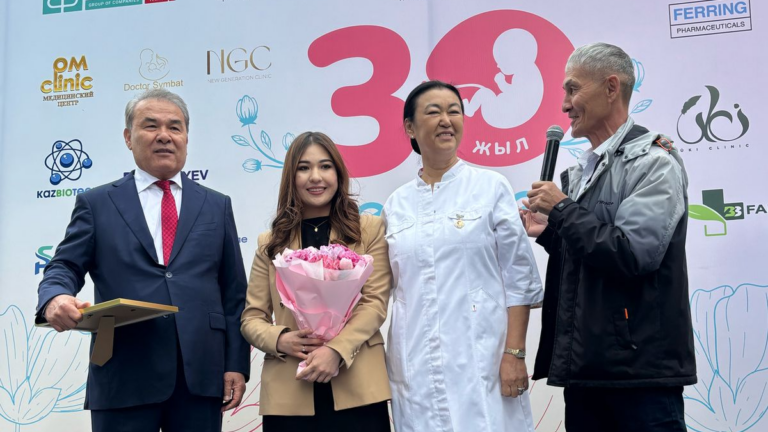
Artificial intelligence will help Kazakhstani reproductologists from Ecomed to more effectively combat infertility

AI opens up new opportunities in the treatment of infertility in Kazakhstan